
Video Window Advances to Phase 2 of NCAT Scaling Innovation Programme
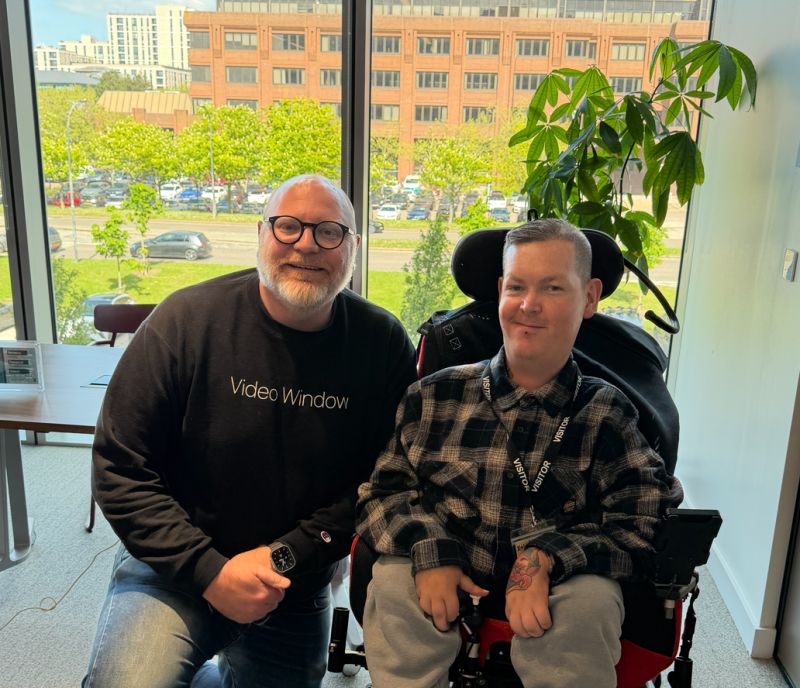
Video Window has officially progressed to Phase 2 of the National Centre for Accessible Transport (NCAT) Scaling Innovation Programme, marking an important milestone in our ongoing work to make transport environments more accessible and connected.
Following the Phase 1 assessment stage, 16 innovators were evaluated, with 11 solutions progressing to the next stage of the programme. Video Window is proud to be among those selected to continue into Phase 2.
The announcement was shared by Luis Canto E Castro, Video Window’s accessibility lead, who supported the project throughout Phase 1 and will continue working alongside the team throughout the next stage.
Moving from Innovation to Real-World Testing
Phase 2 represents a significant step forward for Video Window. The focus now moves beyond development and assessment towards understanding how the solution performs when used by real participants in a controlled environment.
As part of the pre-demonstrator phase, Video Window will undergo controlled environment testing, where participants will interact with the solution in a staged setting. This will allow the team to gather practical feedback and identify how Video Window performs in real-world scenarios.
Alongside the controlled testing, the project will also include a digital survey conducted through the Research Institute for Disabled Consumers (RiDC). This will provide valuable feedback from a panel of disabled people, helping ensure that accessibility considerations are informed by the experiences of the people the technology is intended to support.
Building More Accessible Transport Experiences
Video Window is designed as an always-on video communication portal, providing a simple way for people to connect between locations without the need for traditional meeting links, scheduling or complicated setup.
Through the NCAT programme, the team is exploring how this technology can contribute to more accessible and connected transport environments, including stations and other public-facing locations.
The Phase 2 testing will help Video Window better understand how the platform can be deployed in these environments and, importantly, how it can work for the people using it.
Rather than relying solely on assumptions about accessibility, the programme provides an opportunity to test the technology directly with participants and use their feedback to guide further development.
Looking Ahead
Progressing to Phase 2 is the result of the continued work of the Video Window team, alongside the support of NCAT, Connected Places Catapult and our accessibility partners.
The next stage will provide an opportunity to gather meaningful evidence, refine the solution and better understand the potential role Video Window can play within accessible transport environments.
We are excited to continue this work and look forward to sharing the findings from the Phase 2 programme as the project progresses.
For organisations working in rail, stations and transport accessibility, we welcome conversations about the project and the work being undertaken through the NCAT Scaling Innovation Programme.